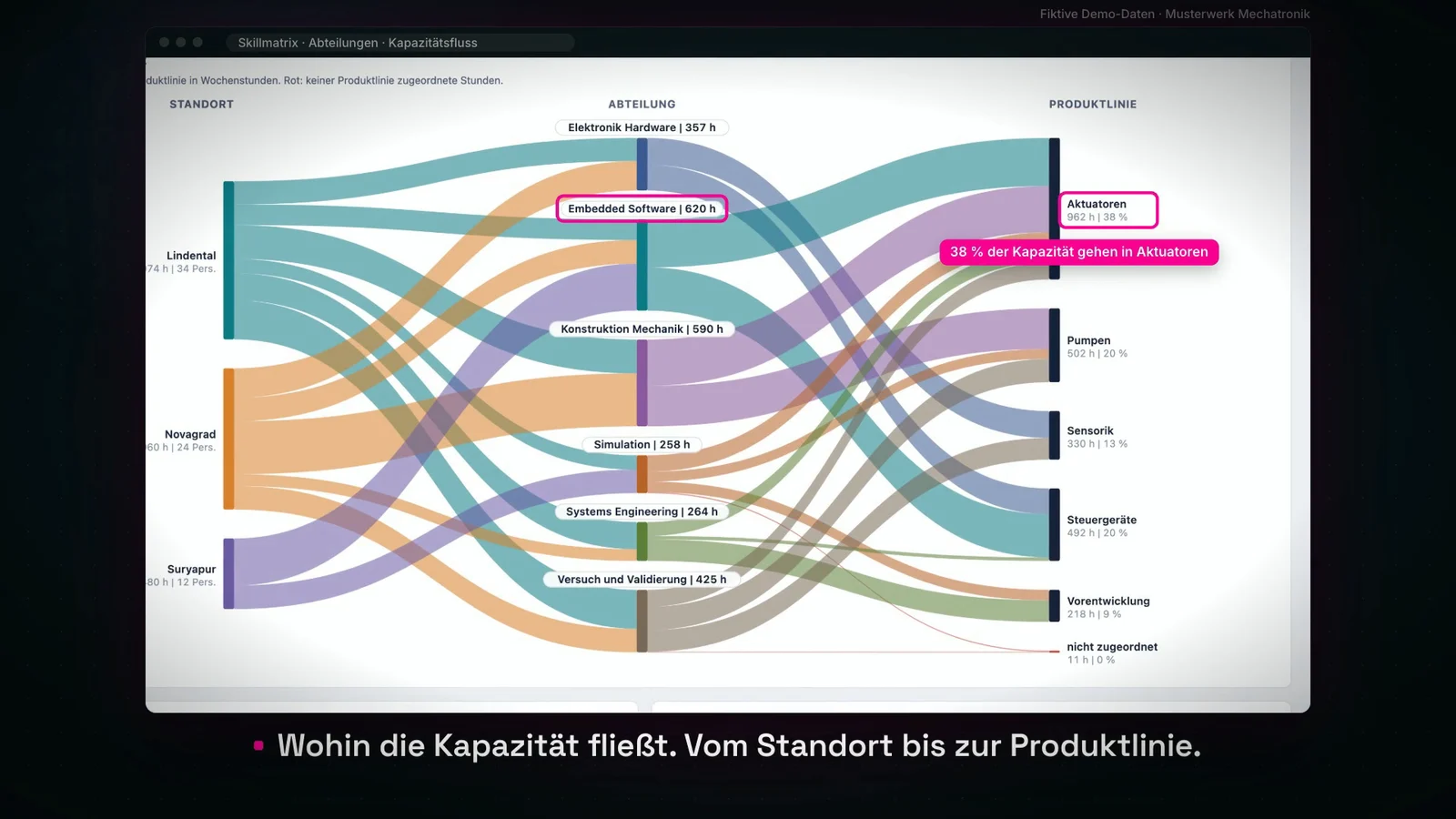
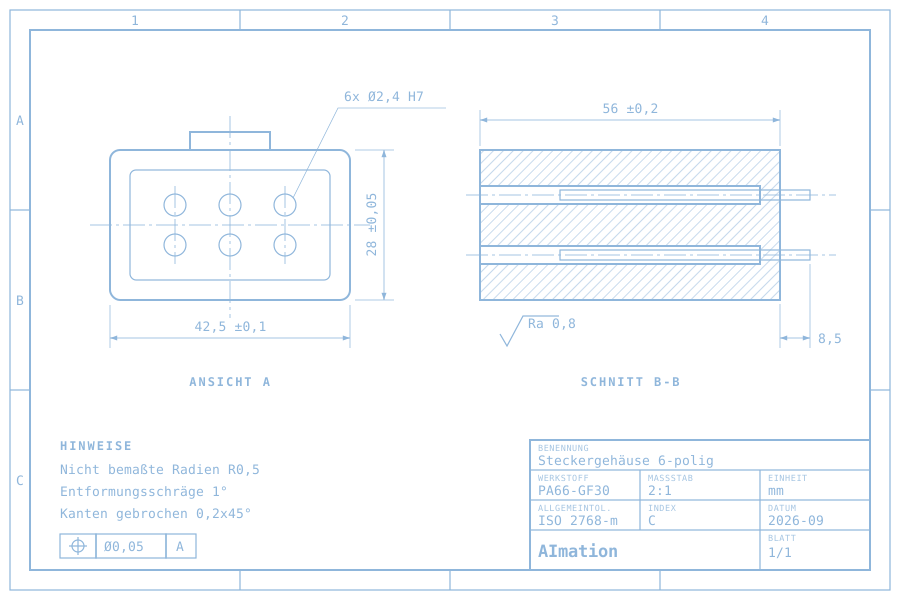
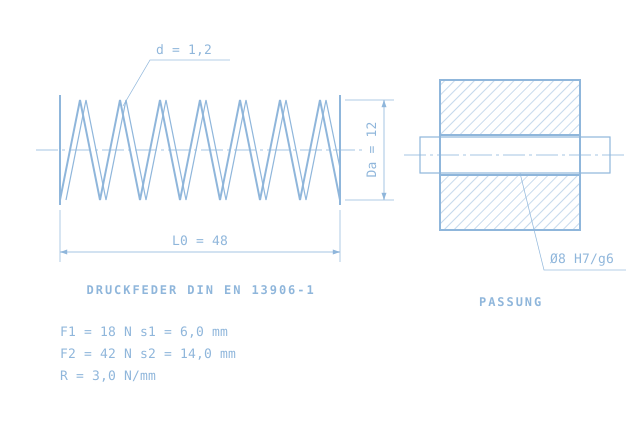
Skillmatrix shows which skills depend on one person and where reserve knowledge exists. Plan backup coverage, knowledge transfer and training before an absence affects your project.
SkillmatrixDemo with sample dataBuilt with AI · expert-maintained skills data
For your working day
Plan transfer where knowledge depends on one person.
A training attendance list cannot tell you whether a team can take on a task. Available skills, backup coverage and future requirements matter. Rare engineering knowledge especially needs a second knowledge holder.
Original recording / German
See the workflow for yourself.
See how skills coverage, reserve knowledge and a key person’s absence connect.
An application developed with AI, shown with the fictional company Musterwerk Mechatronik. It supports skills planning, not automated AI assessment of employee performance.
From input to decision
What the workflow involves.
Structure the skills
Describe roles, teams and relevant capabilities. Agree what each competency level means.
Examine coverage
Look at active and reserve knowledge across teams and locations. Identify gaps and skills held by only one person.
Explore absence scenarios
Check which tasks would lack sufficient coverage during an absence. This is workforce planning, not a judgement about a person.
Plan knowledge transfer
Target training, paired work and knowledge transfer at specific gaps. Regularly update the comparison with future requirements.
AI, rules and data history
Where AI helps. What follows fixed rules.
Skillmatrix was developed with AI. Competency levels and coverage use expert-maintained information and defined evaluation rules. Automated AI assessment of employees is not part of the application. For your implementation, we jointly plan database connections and a change history so that skills records, learning activities and approvals can be traced over time. We agree what to store and who may access it beforehand. The demo shows skills planning; connections and histories are agreed separately for your implementation.
Evaluation plan / results not yet measured
The same task. Both workflows under review.
One team, an agreed competency model and the same data version. A defined absence scenario forms the comparison case.
Find backup coverage
Current workflow
Combine lists and follow-up questions to establish active and reserve knowledge.
With Skillmatrix
Review coverage and reserve skills for the defined requirement profile.
What we measure
Time to an expert-confirmed overview; missing or outdated skills information.
Prioritise transfer
Current workflow
Collect skills gaps and future requirements for training planning.
With Skillmatrix
Use knowledge risks and the strategy comparison to inform transfer activities.
What we measure
Confirmed gaps with a named action and owner; maintenance effort.
The team lead validates coverage. Data collection and ongoing maintenance count towards effort. The comparison evaluates planning, not individual employee performance.
For a first test
What we need from your workflow.
An agreed competency model with clear assessment criteria.
Current, traceable information on coverage and future tasks.
Agreed participation, access permissions and a defined purpose for personal data.
Before we start
Questions worth asking.
Does AI assess employee performance?
No. The demonstrated application supports skills and knowledge planning. Automated AI performance evaluation of individuals is not offered here.
Does the video show real employee data?
No. The demonstration uses the fictional company Musterwerk Mechatronik and sample data.
How does the matrix inform a training plan?
The team compares existing skills with future tasks. This informs specific learning goals, transfer activities and assigned owners. We agree training scope and format together.
Your next step
Bring one case to the free initial call.
Choose a team and a skill that currently lacks backup coverage. We discuss the data, participation and a suitable starting point.