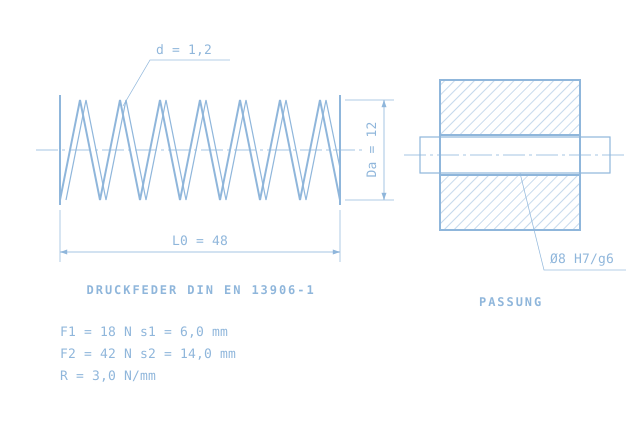
Find omissions before approval.
Check requirements, evidence and recurring defects against defined criteria.

AImation / AI in product development
AI is useful where it removes a specific burden: checking a specification, finding a decision or preparing a review. We start inside your engineering workflow and check what actually helps.
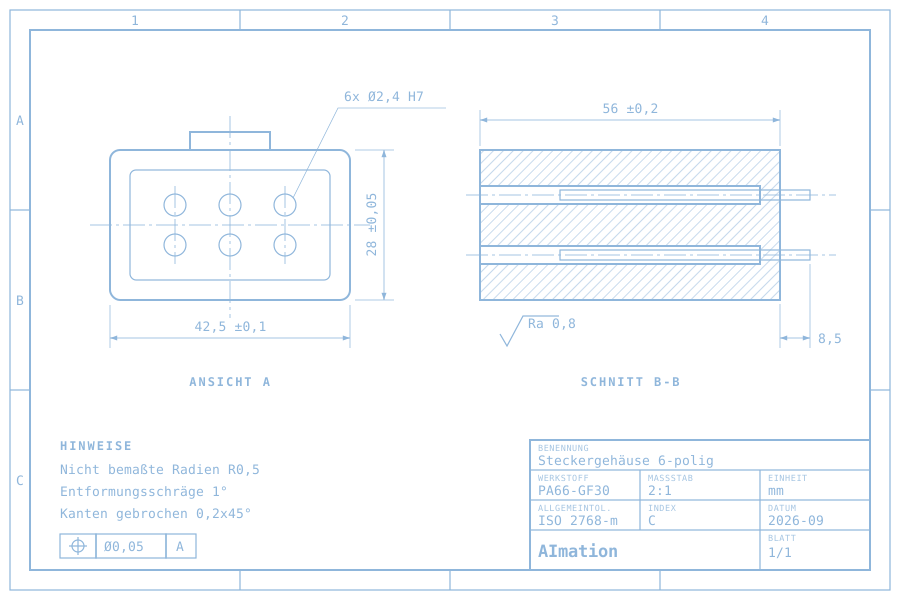
Illustration of the principle · example drawing
Quality / cost / timing
Check requirements, evidence and recurring defects against defined criteria.
Prepare Excel data, meeting decisions and report drafts together. Count checking and correction time too.
Make missing information, conflicting dates and capacity bottlenecks visible before they hold up the next step.
A faster draft is not enough. A pilot must include review time, errors and rework in the comparison.
Development Landscape
The catalogue contains 639 potential applications in 60 areas, mainly technical product development and adjacent functions. The following six phases show selected examples.
Catalogue snapshot: 2026-09-23. Ideas for assessment, not a list of delivered projects.
Requirements
Break a specification into numbered requirements and pre-sort them by category. A domain expert approves the requirements before importing them.
Explore the example →Design
Check drawings against a checklist. Flag missing datums and conflicting specifications with their location. Design engineers retain approval responsibility.
Explore the example →Validation
Compare measurements against limits. Prepare anomalies and remaining margins for the project team. The test team decides on assessment and retesting.
Explore the example →Production launch
Check submission documents against the agreed evidence scope and list missing items. Quality decides whether to accept or request more evidence.
Explore the example →Production & field
Compare new complaints with previous 8D reports and lessons learned. Find similar causes and corrective actions. Quality assesses whether the defect is actually the same.
Explore the example →Change management
Check the reason, impact and supporting evidence of a change request before submission. The requester remains responsible for the justification.
Explore the example →Built by AImation
Three recordings show the current demonstration states. Each detail page explains the workflow, data requirements and limits.
A scoped start
The first step is a task your team can compare before and after. We agree the sources, reviewers and success criteria before building.
Choose a recurring bottleneck. Check available data, access and responsibilities.
Build a scoped pilot. Compare results, review effort and rework with the current process.
Train the people who use and approve the output. Agree maintenance, access and operations before rollout.
Before we start
Potential tasks include structuring requirements, finding previous decisions and drafting reports from approved data. Suitability depends on available sources, the review process and measurable benefit for your team.
No. Development Landscape is a catalogue of potential applications in engineering and adjacent functions. The separate application videos show prototypes or demonstrations, not customer references.
No. The workflows described here retain technical review and approval by the responsible specialists. AI suggestions and drafts must remain traceable to their sources.
Your next step
In the free initial call, we discuss your workflow, your team and a useful starting point. We also say when the approach does not fit.